
Printable Cookbooks for Home Cooks: Top Picks
· Editorial Team

Last Updated: October 22, 2026
Quick Summary
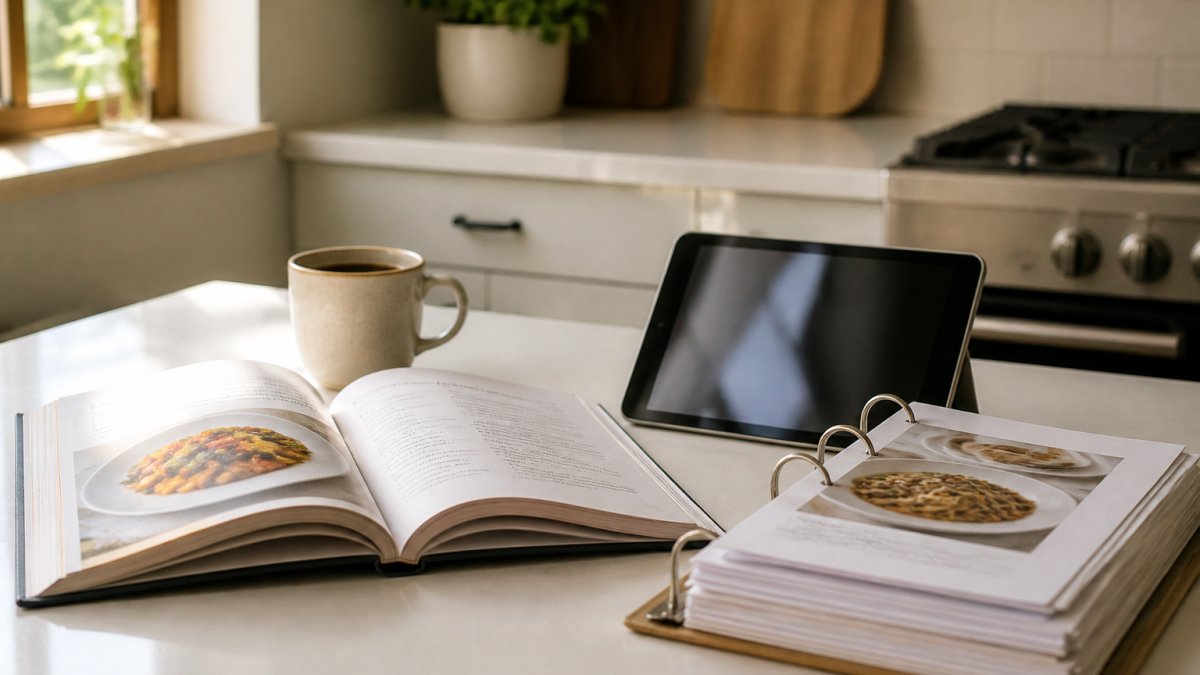
Printable cookbooks are digital recipe collections you download and print at home, giving you a physical reference you can splatter, annotate, and keep on the counter. At Treeline Ridge Creations, each printable cookbook sells as an instant digital download for $12.99 and holds 40 recipes, plus a bonus fillable keepsake PDF with 40 pages.
- Each main cookbook holds 40 recipes and includes the fillable keepsake PDF The Recipes I Leave Behind™.
- Print your ten most-used recipes on cardstock and laminate them so they wipe clean and last for years.
- A one-inch binder holds roughly 100-150 pages; choose tabbed dividers for two or three categories only.
- Print single-sided for pages you plan to annotate, and run a test page before printing the whole file.
- The titles in this guide are for personal use, so print for your own kitchen but do not resell or redistribute the files.
Table of Contents
- Why Printable Cookbooks Work for Busy Home Cooks
- Quick Comparison: 10 Printable Cookbooks at a Glance
- 1. The Garden I Tended™: Best for Vegetarian Home Cooking
- 2. The Bread I Was Taught™: Best for Heirloom Baking
- 3. The Bowl I Was Handed™: Best for Comfort Food
- 4. The Pot I Left Simmering™: Best for One-Pot Meals
- 5. The Lunch I Packed™: Best for Workday Lunches
- 6. The Dish I Brought™: Best for Potlucks and Gatherings
- 7. The Jar I Filled™: Best for Preserves and Gifting
- 8. The Cookie Tin I Inherited™: Best for Holiday Baking
- 9. The Seasons I Gathered™: Best for Year-Round Entertaining
- 10. The Fire I Built™: Best for Campfire and Cookout Cooking
- How to Organize Recipes in a Binder
- Printing and Licensing: What to Know Before You Download
- Frequently Asked Questions
Why Printable Cookbooks Work for Busy Home Cooks
A printable cookbook is a digital recipe collection you download and print at home, a physical reference you can splatter, annotate, and keep on the counter.
At Treeline Ridge Creations, we build printable cookbooks for exactly this kind of cook.
Most roundups list free PDFs with dead links and no printing guidance.
Quick Comparison: 10 Printable Cookbooks at a Glance
Every title below comes from our own catalog, sells as an instant digital download for $12.99, and includes a bonus fillable keepsake PDF called The Recipes I Leave Behind™ with 40 pages for recording family favorites.
| Cookbook | Best For | Recipes | Price |
|---|---|---|---|
| The Garden I Tended™ | Vegetarian home cooking | 40 | $12.99 |
| The Bread I Was Taught™ | Heirloom baking | 40 | $12.99 |
| The Bowl I Was Handed™ | Comfort food | 40 | $12.99 |
| The Pot I Left Simmering™ | One-pot meals | 40 | $12.99 |
| The Lunch I Packed™ | Workday lunches | 40 | $12.99 |
| The Dish I Brought™ | Potlucks and gatherings | 40 | $12.99 |
The remaining four cover preserves, holiday baking, seasonal tables, and outdoor cooking. All are digital products only, so no physical book ships.

1. The Garden I Tended™: Best for Vegetarian Home Cooking
If you cook meatless meals most nights, start here. The Garden I Tended™ packs 40 vegetarian recipes plus the stories behind them, and closes with a challenge to grow, share, and waste nothing.
The garden-inspired structure pushes you toward seasonal ingredients rather than a random assortment.
The honest limitation: this is a vegetarian collection, not a vegan one, so check ingredient lists if you avoid dairy or eggs.
2. The Bread I Was Taught™: Best for Heirloom Baking
Baking rewards a printed recipe you can mark up. The Bread I Was Taught™ collects 40 heirloom bread recipes with their stories, plus a challenge to break bread with someone new.

A common mistake is relying on a phone timer and a scrolling screen mid-knead. Print the page, tape it to a cabinet, and note your proofing times in the margin.
Where it falls short: if you only bake sandwich loaves, the range may be broader than you need. For anyone learning sourdough or traditional methods, it earns its place.
3. The Bowl I Was Handed™: Best for Comfort Food
Soup is the most forgiving thing you can cook, and The Bowl I Was Handed™ gives you 40 recipes built around it, each with a story and a challenge to carry a bowl to someone who needs it.

Soup recipes often run long, so print double-sided and bind with a simple three-ring binder. Add a recipe binder printable index at the front so you can find the chili without flipping through every page.
The drawback is seasonal: you will reach for this one more in cold months. The tradeoff is worth it, because a printed soup recipe survives steam, spills, and a crowded counter in a way a tablet does not.
4. The Pot I Left Simmering™: Best for One-Pot Meals
Slow-cooker cooking lives or dies on morning prep, and The Pot I Left Simmering™ is organized around that rhythm.
You assemble ingredients before work, often half-awake, so a printed page on the counter beats unlocking a phone with raw chicken on your hands.
One caveat: slow-cooker recipes assume you own a slow cooker of a standard size.
5. The Lunch I Packed™: Best for Workday Lunches
Packing lunch is where good intentions collapse. The Lunch I Packed™ gathers 40 recipes for workday lunches carried to the mine, the mill, the office, and the job site, with a challenge to share the table at work.
This title suits anyone who brown-bags it and wants variety without a daily decision. Print the whole book, punch holes, and keep it in a slim binder you can grab on Sunday while meal planning.
The limitation: if you work from home, the portability angle matters less, though the recipes still work.
6. The Dish I Brought™: Best for Potlucks and Gatherings
Show up with something worth sharing. The Dish I Brought™ holds 40 casserole and potluck recipes, the stories behind them, and a challenge to turn a shared meal into connection.
For home cooks who get the "bring a dish" text regularly, this is the most practical title in the set.
Where it falls short: potluck food skews hearty, so it is not your weeknight light-dinner book. That is fine. It knows what it is for.
7. The Jar I Filled™: Best for Preserves and Gifting
Canning season deserves a printed reference. The Jar I Filled™ collects 40 jam, jelly, and preserve recipes, plus a challenge to put up the season and give it away.
Preserving rewards precision, and a printed page you can check off as you go beats a screen you cannot touch with sticky hands.
The honest caveat: home preserving carries real food-safety rules. Follow tested processing times and do not improvise on acidity.
8. The Cookie Tin I Inherited™: Best for Holiday Baking
Holiday baking is memory work, and The Cookie Tin I Inherited™ treats it that way. Forty heirloom holiday baking recipes, their stories, and a challenge to give it all away.
The Garden I Tended™ | Printable Vegetarian Cookbook →
Print this one early in the season and build a baking plan around it.
The limitation is obvious: it is a holiday book. Outside November and December, it sits on the shelf.
9. The Seasons I Gathered™: Best for Year-Round Entertaining
This is the broadest title for entertaining. Print it once, organize by season with divider tabs, and you have a ready reference for every gathering.
The tradeoff: because it spans the year, no single season gets as deep a recipe set as a dedicated holiday book. Think of it as the reliable generalist in your collection.
10. The Fire I Built™: Best for Campfire and Cookout Cooking
Outdoor cooking needs a printed page more than any other kind.
Print this one on heavier paper before a camping trip, because wind and smoke are not kind to thin sheets.
Where it falls short: campfire cooking assumes access to a fire pit or grill. If you cook indoors year-round, one of the one-pot or comfort-food titles serves you better.
How to Organize Recipes in a Binder
A binder is only as useful as its organization. The goal is not a pretty binder, it is a binder you can open with one hand and find the right page in under thirty seconds. That means organizing by how you actually cook, not by how the cookbook is printed.
Start with the categories you cook from
The default categories, breakfast, mains, sides, baking, preserves, work for most households, but they are not the only option. A common pattern among home cooks who stick with a binder is to organize by need rather than by course:
- By skill level. Beginner, intermediate, and project recipes. Useful if you are learning and want to avoid reaching for a weekend project on a Tuesday.
- By cooking time. Under 30 minutes, 30-60 minutes, and weekend projects. This is the single most useful filter for busy cooks.
- By dietary need. Vegetarian, dairy-free, low-sodium, and so on. Keep a separate tab for recipes that fit a household member's restriction so you are not re-reading every page.
Pick two or three of these, not all of them. A binder with too many tabs is as hard to use as one with none.
A practical setup sequence
- Choose a one-inch or two-inch binder with clear sleeves. One inch holds roughly 100-150 pages; two inches holds more but gets heavy.
- Add tabbed dividers for your chosen categories. Write the tabs in pencil first so you can adjust after a month of use.
- Print single-sided for any page you plan to annotate. Double-sided is fine for reference pages you will not write on.
- Hole-punch and load pages in category order. Keep a small stack of blank template pages at the back for recipes you find elsewhere.
- Build a one-page index at the front. List your ten most-cooked recipes with their tab and page number. Update it monthly.
- Use the fillable keepsake PDF for your own family versions. Record the tweaks you make so the binder reflects how your household actually cooks.
Keep the binder from bloating
The failure mode of every recipe binder is the same: it fills with pages you never cook from. Once a month, pull out any recipe you have not cooked in the last two months and move it to a "try later" section at the back. If it stays there for a season, remove it.
Make it a family recipe book over time
The binder is the scaffold; the family recipe book is what it becomes. As you cook, write your own versions on the blank template pages and file them next to the printed recipe they came from. Over a year or two, the binder stops being a printed cookbook and starts being a record of what your household actually eats, which is the whole point of printing it in the first place.
Printing and Licensing: What to Know Before You Download
Most printable cookbook roundups stop at the download link. That is where the real work starts. Before you hit print, you need to know three things: what page size the file uses, how much ink it will cost you, and what you are legally allowed to do with the file once it is on your drive.
Page sizes and print settings
Printable cookbooks are usually built for one of two page sizes: US Letter (8.5 × 11 in) or A4 (210 × 297 mm). Check the file's page setup before printing. If a US Letter file prints on A4 paper (or vice versa), most printers will scale it to fit, but margins can shift and page numbers may drift.
A few settings that matter more than people expect:
- Print single-sided if you plan to annotate. Double-sided saves paper but puts your notes on the back of the next recipe.
- Choose a slightly heavier paper for weekly-use pages. Standard 20 lb copy paper works for a binder; 24-32 lb paper or light cardstock holds up better near a stove.
- Print a test page first. One page tells you whether the type is readable, whether the margins are safe, and whether the file is image-heavy or text-based.
Ink-saving and printer-friendly layouts
Full-color cookbooks look great on a screen and drain ink cartridges on paper. If you print often, look for a file that offers a low-ink or grayscale version, or set your printer to grayscale before printing.
If the file is image-heavy, consider printing only the recipe pages you will cook from this month and keeping the full file on your device as the master copy.
Binding methods that actually hold up
Three binding options work well for home-printed cookbooks:
- Three-ring binder. The most flexible option. Print, hole-punch, and add or remove pages as your cooking changes. Use tabbed dividers by category.
- Comb or spiral binding at a copy shop. Durable and lays flat on the counter, which matters for recipes you read while cooking. Copy shops typically charge by the page plus a binding fee.
- Stapled or clipped booklet. Fine for a short collection or a seasonal set you will replace. Not ideal for a cookbook you plan to keep for years.
For pages that will sit near the stove, a sheet protector or a quick lamination of your ten most-used recipes is the cheapest durability upgrade you can make.
Licensing: public domain, personal use, and redistribution
Licensing is the part most roundups skip, and it is the part that determines whether you can legally print, share, or reuse a file. There are three common categories:
- Public domain. Works whose copyright has expired or that were published without copyright. You can print, copy, and redistribute these freely. Many older community cookbooks and government-published recipe collections fall here, but always verify the specific title rather than assuming.
- Free for personal use. The most common category for modern printable cookbooks. You can download and print for your own kitchen, but you cannot resell the file, upload it elsewhere, or hand the PDF to a friend. If you want to share a recipe, print a copy for them instead of sending the file.
- All rights reserved / commercial. Some files restrict printing, sharing, or any reuse beyond a single household. Read the license note on the product page before you buy.
A simple rule: if the listing does not state the license, ask before you print and share. For the titles in this guide, the files are for personal use, print as many copies as you need for your own kitchen, but do not resell or redistribute the files.
Keep a backup and a print log
Digital files can be re-downloaded from your account, but a saved copy on a drive or in cloud storage means you never lose access to a cookbook you have already printed and annotated. Keep a simple print log, title, date printed, and which pages you replaced, so you know when a well-used page needs a fresh copy.
Frequently Asked Questions
What should a home cook include in a personal cookbook?
A useful personal cookbook holds the recipes you actually cook, not just the ones you aspire to. Include the dish name, yield, prep and cook times, ingredients with metric measurements, numbered steps, and notes on what worked. Add a section for family favorites and a page for safe internal temperatures so you can check doneness with a food thermometer. The Recipes I Leave Behind™ bonus PDF that comes with every Treeline Ridge Creations printable cookbook gives you 40 fillable pages built for exactly this.
How do you make a cookbook printable?
Start with a PDF laid out for standard paper, usually US Letter or A4, and check that margins leave room for a three-hole punch. Print single-sided on 80-100 gsm paper for everyday pages, or heavier cardstock for covers and divider tabs. Test one page first to confirm your printer does not shrink the layout. All Treeline Ridge Creations printable cookbooks arrive as digital downloads ready to print at home, with no physical book shipped.
What is the best format for organizing recipes at home?
A three-ring binder with tabbed dividers works for most households because you can add, remove, and reorder pages as your cooking changes. Sort by meal type (breakfast, lunch, dinner, baking) or by cuisine, then keep a short list at the front of your ten most-cooked dishes. Recipe binder printables give you consistent page layouts so new recipes slot in without reformatting.
How do you create a family recipe book?
Gather the recipes first, in whatever form they exist: index cards, screenshots, handwritten notes. Type each one into a family recipe book template so measurements and steps are consistent, then add the story behind the dish, who cooked it, and when. Print a copy for each household and keep a fillable version for new additions. The Recipes I Leave Behind™ fillable keepsake included with each Treeline Ridge Creations cookbook is designed for this handoff.
How many recipes should a personal cookbook have?
Forty recipes is a practical size: enough variety to cover a month of dinners without becoming a book you never open. Each Treeline Ridge Creations printable cookbook contains 40 recipes plus a bonus 40-page fillable keepsake, so you get a full collection and room to add your own. If you cook for one or two people, start with 20 favorites and grow the binder as you test new dishes.
Cooking from a screen gets old fast. Treeline Ridge Creations builds printable cookbooks that put the recipe on your counter where it belongs, with instant downloads, fillable keepsake pages, and formats you can print and bind your own way. Explore our printable cookbook collection and start building a recipe binder you will actually use.